A Concise Guide to RF Attenuators and Their Design
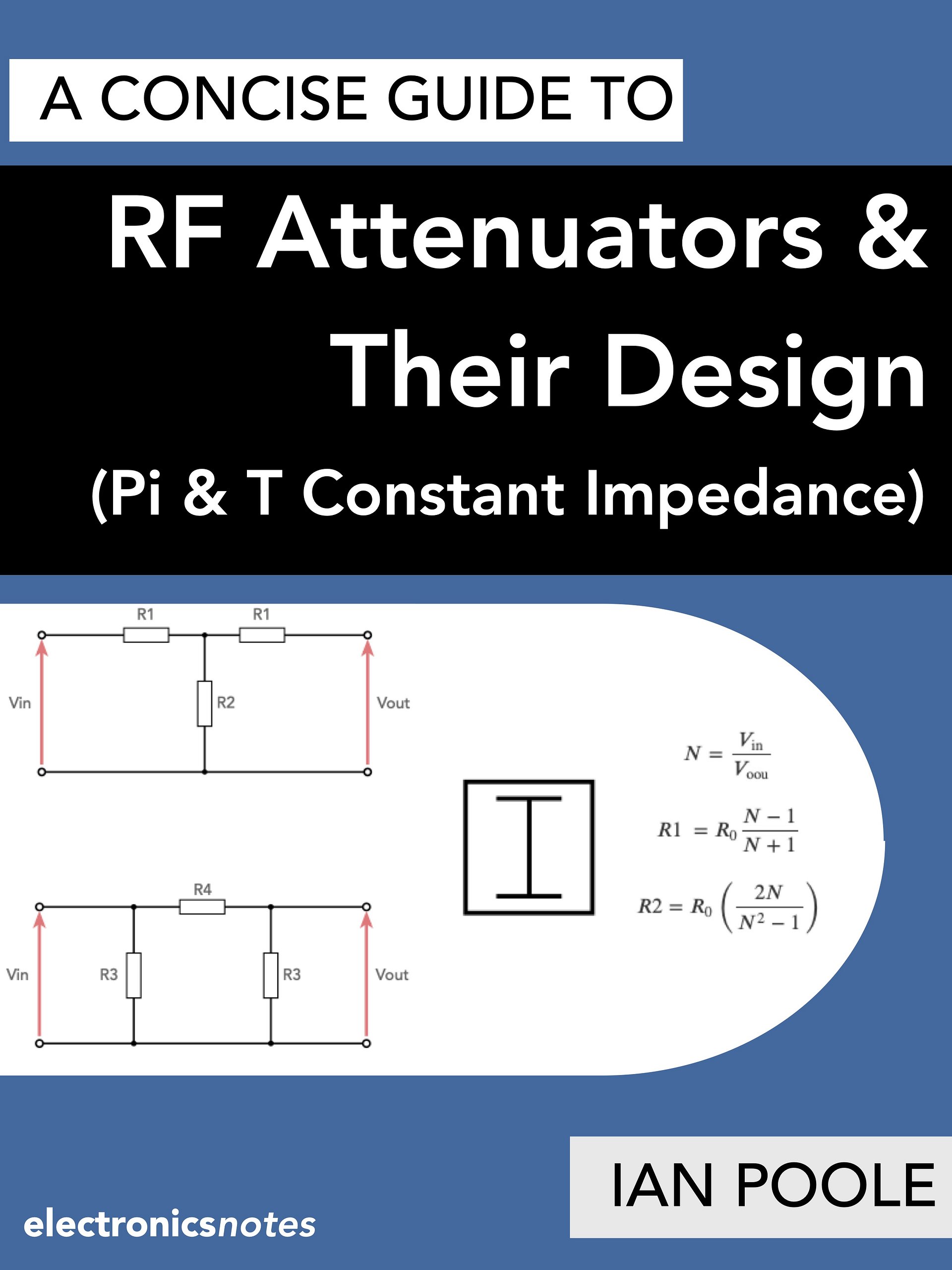
This PDF download covers the basic aspects of constant impedance Pi and T RF attenuators and their design.
RF attenuators are used in many areas of electronics and in particular within RF design where they have many applications from reducing signal levels to what is needed to providing better impedance matches.
The download is a concise introduction and summary of these very useful circuit blocks, showing what they are, the different types, their specifications and how to design them.
Useful guidelines, hints and tips are also given to ensure that any designs are able to work to theirr best.
The download is just over 5500 words long and it extends to around 20 content pages, so there is plenty of information contained within it.
Contents include:
Introduction
Understanding RF attenuators: basics, types, symbols
What is an attenuator
Types of RF attenuator
Attenuator symbols
Applications
Attenuator specifications
Specifications and parameters
(includes attenuation, power, accuracy, frequency response, VSWR, mechanical details, environmental, other important aspects)
Pi & T Circuit Design
T pad design and equations
Pi pad design and equations
Bridge T format
Design considerations
Table of values
Table for T, Pi and bridged T formats (1 to 20dB) for 50 ohm systems
How to determine values for other levels of characteristic impedance
Relative advantages and disadvantages of Pi and T configurations
Balanced resistive attenuator pads